
Preconstruction is the most critical phase of any building project. It is where you set the budget, pick your partners, and define the scope. Yet, it is also where the most expensive mistakes happen. A single missed line item in a masonry bid or an unvetted subcontractor can lead to six-figure change orders and months of delays.
Managing risk in preconstruction used to mean hours of manual data entry into Excel and relying on "gut feelings" about which subcontractor to hire. Today, general contractors are using their own Procore data and AI to spot these risks before they sign a contract.
The High Cost of Preconstruction Risks
The risks you miss during the bidding phase do not disappear. They simply wait until you are on-site to become expensive problems. Scope gaps are a primary culprit. When three different subcontractors exclude a specific task like "temporary power" or "site cleanup," and the estimator misses it, the general contractor ends up paying for it out of their margin.
Hiring the wrong subcontractor is another major risk. A low bid looks great on a spreadsheet, but if that vendor has a history of safety violations or poor quality in the field, the "savings" evaporate quickly. Research by MDPI (2026) found that AI-based frameworks can identify a broader range of project risks than traditional expert judgment alone, helping teams avoid the human bias that often leads to poor award decisions.
Using Procore Data as a Risk Mitigation Tool
Most general contractors are sitting on a goldmine of data inside Procore. Every past project, inspection report, and change order contains clues about future risks. The challenge is that this data is often fragmented. Estimators might not see the quality issues a project manager faced on a job three years ago.
By centralizing all bid information and historical performance data, you create a single source of truth. As a recent industry forecast on Procore Jobsite highlights, the shift in 2026 is moving away from just digitizing forms toward using predictive intelligence to manage these complex infrastructure pipelines.
Identifying Scope Gaps Before They Become Problems
Manual bid leveling is a recipe for error. When you are looking at dozens of PDF proposals, it is easy to miss a subtle exclusion in the fine print. AI-powered tools now scan these proposals automatically. They look for missing line items and normalize the data so you can compare bids side-by-side.
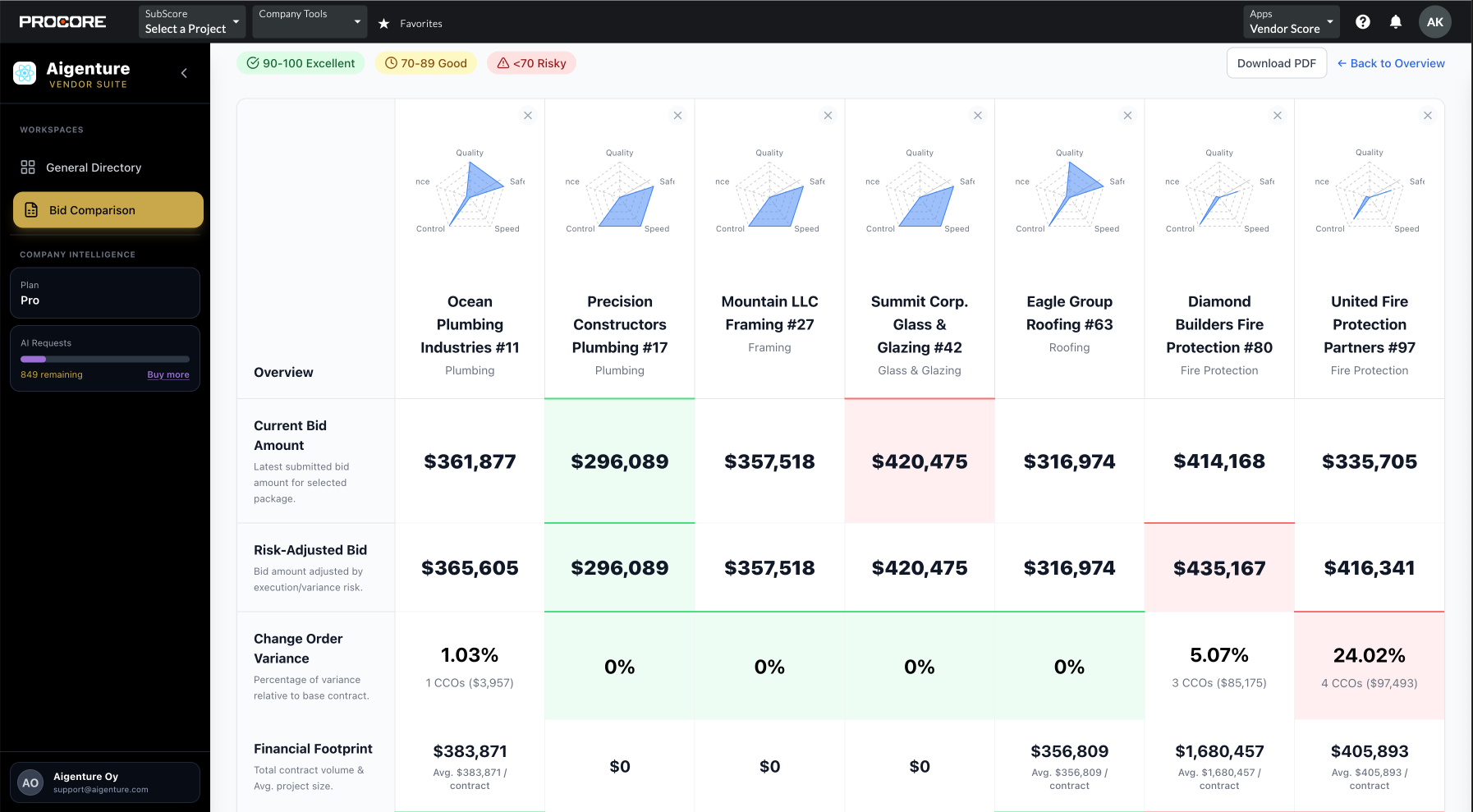
When you can see exactly what is included and what is missing across every bid, you can have more productive conversations with subcontractors. Instead of a vague "is everything included?" you can ask, "I see you excluded the waterproofing on the north wall, why was that?" This level of detail eliminates the "gotchas" that lead to change orders.
Vetting Subcontractors with Deep Vendor Intelligence
Prequalification is more than just checking an insurance certificate once a year. Real risk management requires a deep dive into a subcontractor's current health. This includes their financial stability, legal history, and even recent news that might indicate trouble.
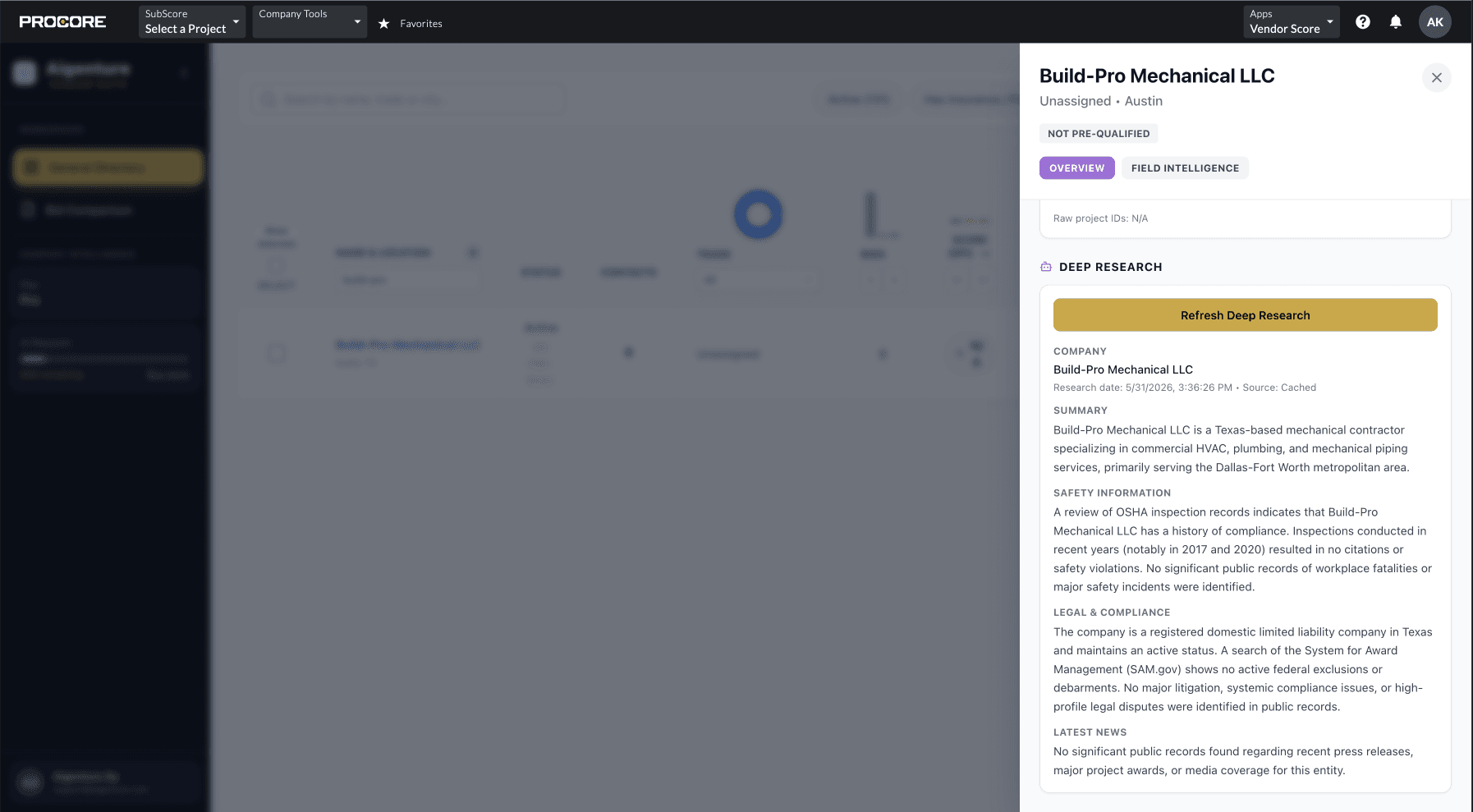
Using AI to perform deep research on every vendor allows you to see the full picture. You can verify if a subcontractor has the actual capacity to handle your project's specific trade and volume requirements. This proactive vetting ensures you are building a resilient supply chain rather than just filling a slot on a project.
Bridging the Gap Between the Field and Estimating
The most valuable risk data comes from the field. If a subcontractor consistently fails inspections or has a high rate of safety observations, that information needs to be available to the preconstruction team.
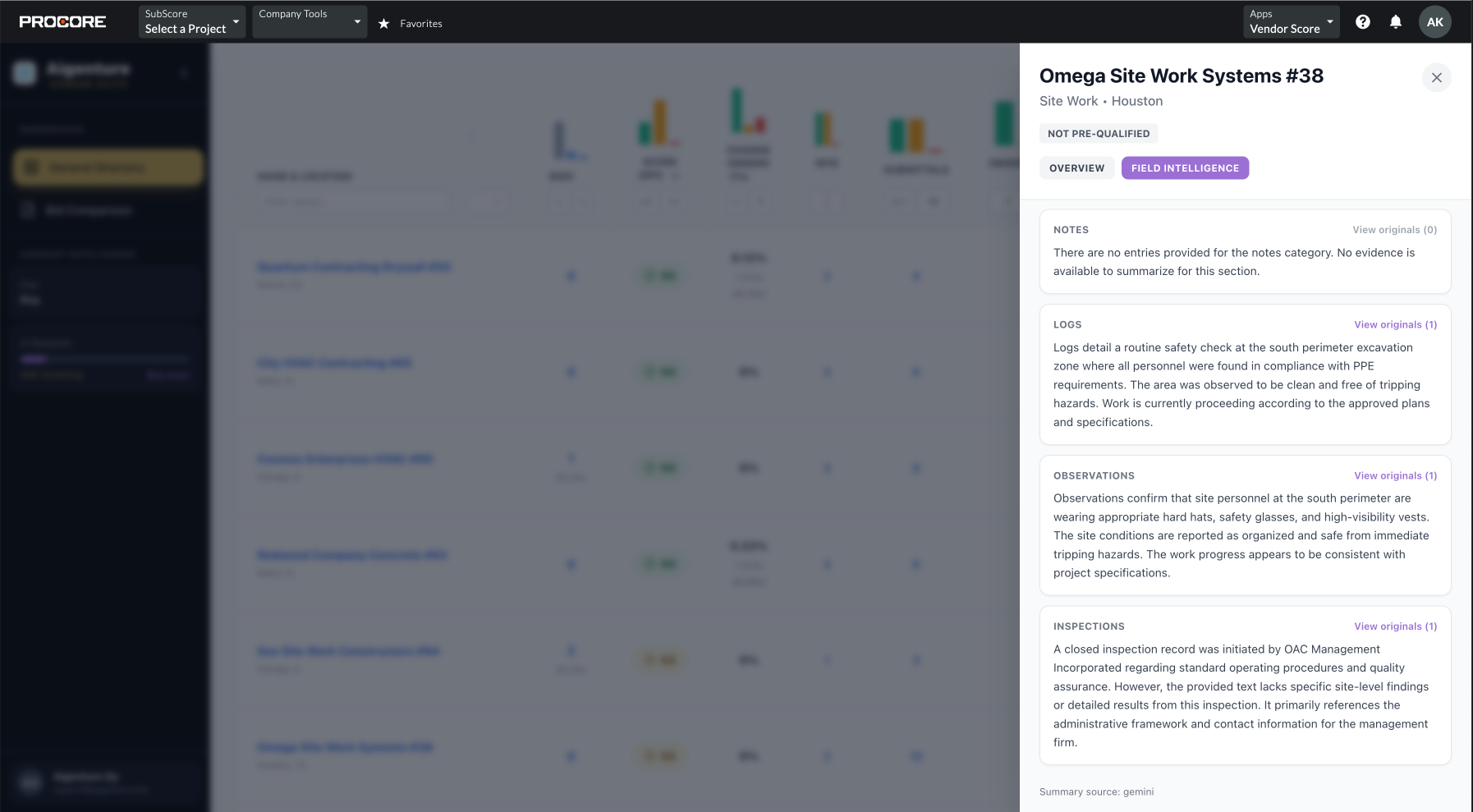
Connecting field intelligence to the bidding process allows you to reward high-performing partners. A study by BUE Scholar (2025) suggests that integrating AI into the early design and planning phases can help mitigate errors before they reach the field, potentially reducing design-related risks by a significant margin. By looking at past performance metrics like inspection pass rates and schedule adherence, you can make award decisions based on facts rather than just the lowest price.
Building a Data-Driven Preconstruction Workflow
Moving to a data-driven workflow does not mean replacing your estimators. It means giving them better tools to do their jobs. When you automate the tedious parts of bid leveling and vendor research, your team can focus on the high-level strategy and relationship building that wins projects.
The long-term ROI of better bid intelligence is clear: fewer change orders, better margins, and more predictable project outcomes. By using the data you already have in Procore, you can turn your preconstruction phase from a source of anxiety into a competitive advantage.
Aigenture helps general contractors reduce risk by bringing AI-powered bid intelligence directly into Procore. Our platform automates bid comparison, provides deep vendor research, and connects field performance to your award decisions. Stop guessing and start awarding with confidence. View Plans or Contact Us to learn more.
References
- MDPI (2026). "Intelligent Risk Identification in Construction Projects: A Case Study of an AI-Based Framework." Journal of Open Innovation: Technology, Market, and Complexity.
- BUE Scholar (2025). "Artificial Intelligence Towards Enhancing the Risk Management Practices During the Design Process." The British University in Egypt.
- "2026 Forecast: 5 Construction Tech Trends for Transformation." Procore Jobsite.
- "The Preconstruction Phase: A Deep Dive into the Precon Process." Procore Jobsite.