
In the fast paced world of preconstruction, a low bid can feel like a win. But experienced estimators know that the lowest number often hides the highest risk. When you are reviewing dozens of subcontractor proposals for a single project, it is easy to miss a small exclusion or a vague scope description that turns into a massive change order six months later.
Identifying these risks during the bid leveling phase is the only way to protect your project margins. If you do not catch them before awarding the contract, you are essentially gambling with the project's profitability.
Why hidden risks in bids are so dangerous
Hidden risks in subcontractor bids are dangerous because they are often invisible until the project is well underway. A missed scope item or an unrealistic pricing assumption does not just cost money, it creates a ripple effect. It leads to schedule delays, disputes between trades, and a breakdown in trust on the job site.
As a recent industry report from Liberty Insurance highlights, subcontractor-driven losses often originate months before a claim is ever filed. These losses usually start during the onboarding and contract execution phases, where vague scope descriptions and unvalidated insurance details create a foundation of risk.
1. Inconsistent Scope of Work
The most common risk in any bid is a scope gap. This happens when a subcontractor omits a specific task that was required in the bid package. Sometimes it is an honest mistake, but other times it is a strategic move to keep their price low.
Research by Smith et al. (2025) found that using Natural Language Processing to classify contract sentences into categories like "Obligation" and "Risk" can help identify these overlooked responsibilities with high accuracy. Without automated tools, estimators have to manually cross-reference every line item in a PDF against the master scope, a process that is prone to human error.
2. Unrealistic Unit Pricing
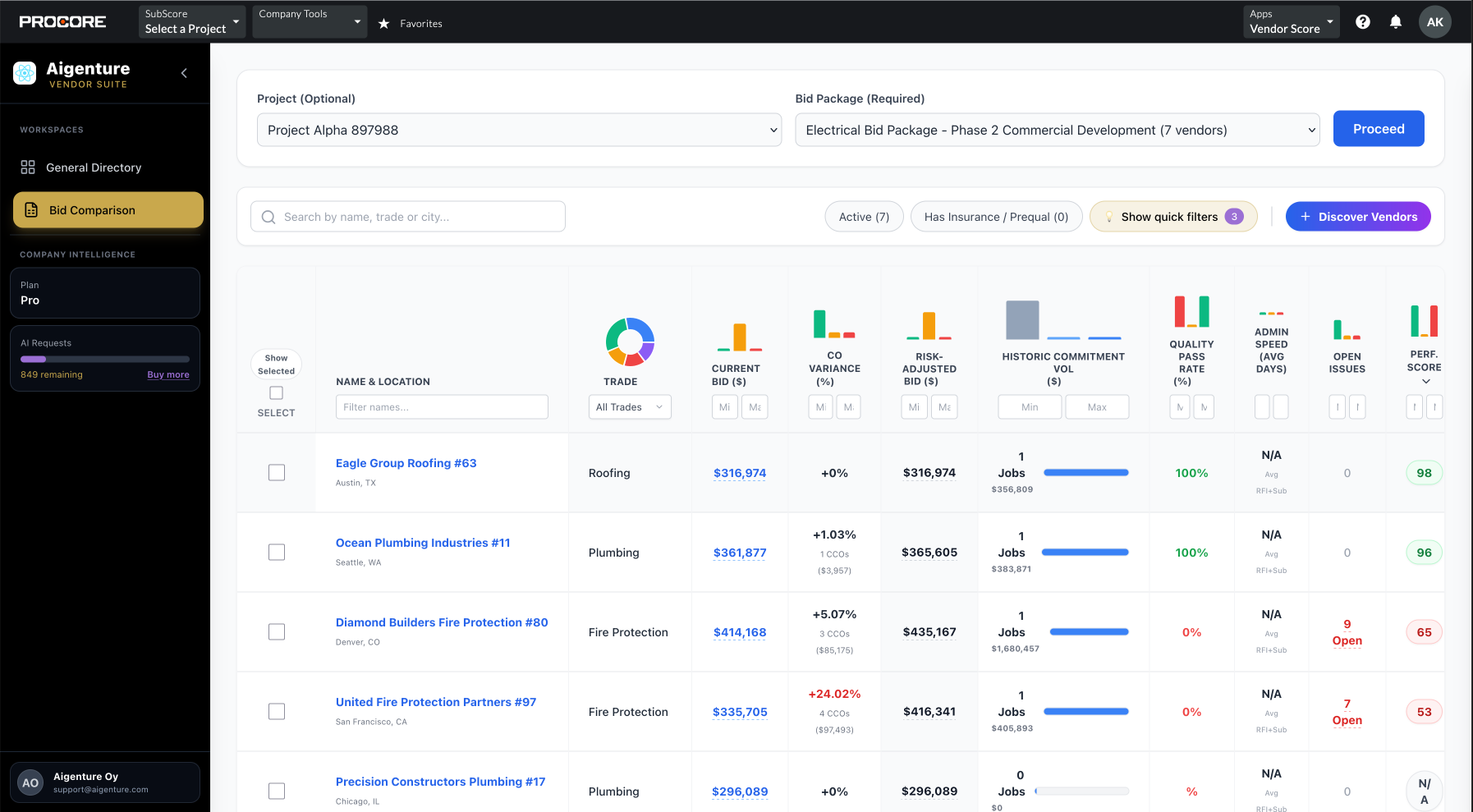
If a subcontractor's unit price for a specific material or labor task is significantly lower than the project average, it is a red flag. While it might look like a saving, it often indicates that the subcontractor does not fully understand the complexity of the work or is "front-loading" the bid to improve their cash flow early in the project.
When you see a price that is "too good to be true," it usually is. These "plug numbers" often lead to subcontractors cutting corners on quality or requesting price increases later when they realize the work is costing them more than they estimated.
3. Vague Exclusions and Clarifications
The fine print in a proposal is where many risks live. Subcontractors often include a list of exclusions that can be intentionally vague. Phrases like "per plans and specs" without further detail are a major risk. You should always look for "by others" exclusions. If two different trades both exclude the same task, you have a gap that the general contractor will eventually have to pay for.
4. Labor and Manpower Assumptions
With the ongoing labor shortage in the construction industry, a subcontractor's ability to actually man the job is a critical risk factor. As a recent report on ConstructConnect points out, the labor shortage has made it harder for subcontractors to guarantee their crew sizes.
You need to verify if the subcontractor has the manpower to meet your schedule. A low bid from a company that is already overextended across five other projects is a recipe for a schedule delay.
5. Material Lead Time Risks
Supply chain volatility has made material lead times a top priority for preconstruction teams. The "Bid-to-Buyout" problem, as described in a recent industry analysis by SWK Technologies, occurs when extreme lead times for critical equipment force contractors to make financial commitments before budgets are even finalized.
If a subcontractor bid does not explicitly state lead times for long-lead items, or if they have not locked in their material pricing, your project budget is at risk of "margin fade" before the first shovel hits the ground.
6. Financial and Performance History
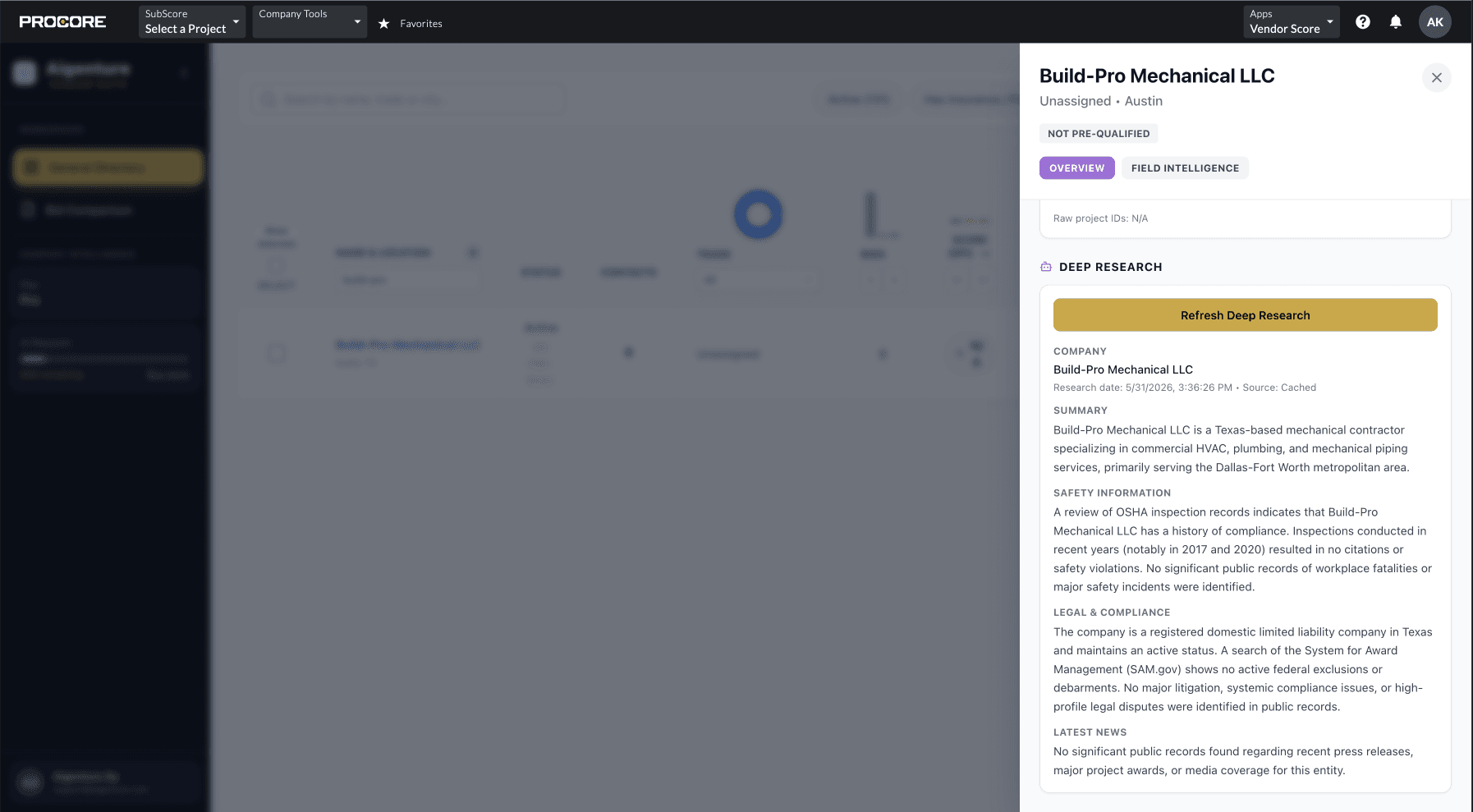
A subcontractor's past performance is the best indicator of their future success. You need to look beyond the bid and check the company's health. Do they have a history of safety violations? Are their financial statements stable?
Using field intelligence to see actual project outcomes from previous jobs can reveal risks that a proposal won't show. For example, a subcontractor might consistently have a high rate of change orders or a slow punch list completion speed.
7. Overlapping Scopes Between Trades
Just as dangerous as a scope gap is a scope overlap. This happens when two different subcontractors both include the same work in their bids. If you are not careful, you might end up paying for the same task twice. Automated bid leveling tools are essential here, as they can highlight these overlaps by comparing bids side-by-side across different trade packages.
How to automate risk detection in Procore
The traditional way of spotting these risks involves printing out PDFs and manually entering data into a spreadsheet. This is slow and makes it easy to miss the subtle red flags we have discussed.
By moving your bid analysis into a native Procore environment, you can use AI to scan proposals for risks instantly. Tools like Aigenture can normalize bids, highlight scope gaps, and pull in historical performance data without you ever leaving Procore. This allows you to move from manual data entry to high-level decision making.
If you want to learn more about streamlining this process, check out our guide on How to Automate Bid Leveling in Procore or read about How to Track and Evaluate Subcontractor Historical Performance.
Aigenture helps preconstruction teams identify these hidden risks 10x faster by turning Procore data into a decision engine. Our AI-powered platform normalizes bids and provides deep vendor intelligence natively inside your existing workflow. View Plans or start your 30-day free trial today to see how we can help you protect your project margins.
References
Smith, J. et al. (2025). "Automated Construction Contract Analysis for Risk and Responsibility Assessment Using NLP and Machine Learning." Computers in Industry.
"Subcontractor Risk in 2026: The Hidden Exposure That Determines Project Success." Liberty Insurance.
"Pre-Contract Procurement: The Hidden Financial Risk for General Contractors." SWK Technologies.
"What the Labor Shortage Means for Construction Bidding in 2026." ConstructConnect.
"The Bid-to-Buyout Problem in Modern Construction." Archdesk.