
The transition from preconstruction to operations is one of the most vulnerable moments in a construction project. After weeks or months of intense bidding, leveling, and negotiation, the estimating team finally awards a contract. Then, they hand the project over to the field team.
In many companies, this handover feels like throwing a heavy box over a high wall. The estimators move on to the next bid, and the project managers are left to figure out what was actually agreed upon. When this process fails, the consequences show up as budget overruns, schedule delays, and strained relationships with subcontractors.
The 'Wall' Between Preconstruction and Operations
The gap between estimating and operations is often caused by silos. Estimators live in spreadsheets and bid packages. Project managers live in schedules and daily logs. When information stays trapped in an estimator's personal inbox or a local folder, the field team starts the project at a disadvantage.
Research by Whyte et al. (2016) found that data handover often fails because the structures used during project delivery do not match what is needed for long-term operations. In the context of a general contractor, this means the detailed "why" behind a subcontractor selection is often lost. The project manager might see the final price, but they miss the critical notes about scope exclusions or verbal promises made during the final leveling meeting.
As a recent industry report on Buildr highlights, construction teams can lose up to 35% of their productivity simply searching for information that was already collected during the preconstruction phase. This is a massive waste of time that can be avoided with a structured handover process.
Risks of a Poor Vendor Information Handover
When the handover is incomplete, the project team inherits hidden risks. These risks usually manifest in three ways:
- Scope Gaps: If a project manager does not know exactly what was excluded from a bid, they might assume a subcontractor is covering work that they aren't. This leads to emergency change orders in the first month of the project.
- Budget Erosion: Estimators often negotiate specific unit rates or "value engineering" options. If these details aren't clearly communicated, the project manager might approve invoices or change orders at the wrong price.
- Relationship Friction: Subcontractors get frustrated when they have to explain their scope and exclusions to a project manager after already spending weeks doing so with an estimator. It starts the project on a note of distrust.
Essential Vendor Data to Transfer in Procore
To break down the wall, you need to ensure specific data points move from the bidding phase into the active project. At a minimum, your handover should include:
- The Final Leveled Bid: Not just the original proposal, but the final version after all clarifications.
- Detailed Exclusions: A clear list of what the subcontractor is not doing.
- Risk Notes: Any concerns the estimator had about the subcontractor's capacity or financial health.
- Historical Performance: Data on how this vendor performed on previous projects, including quality and safety metrics.
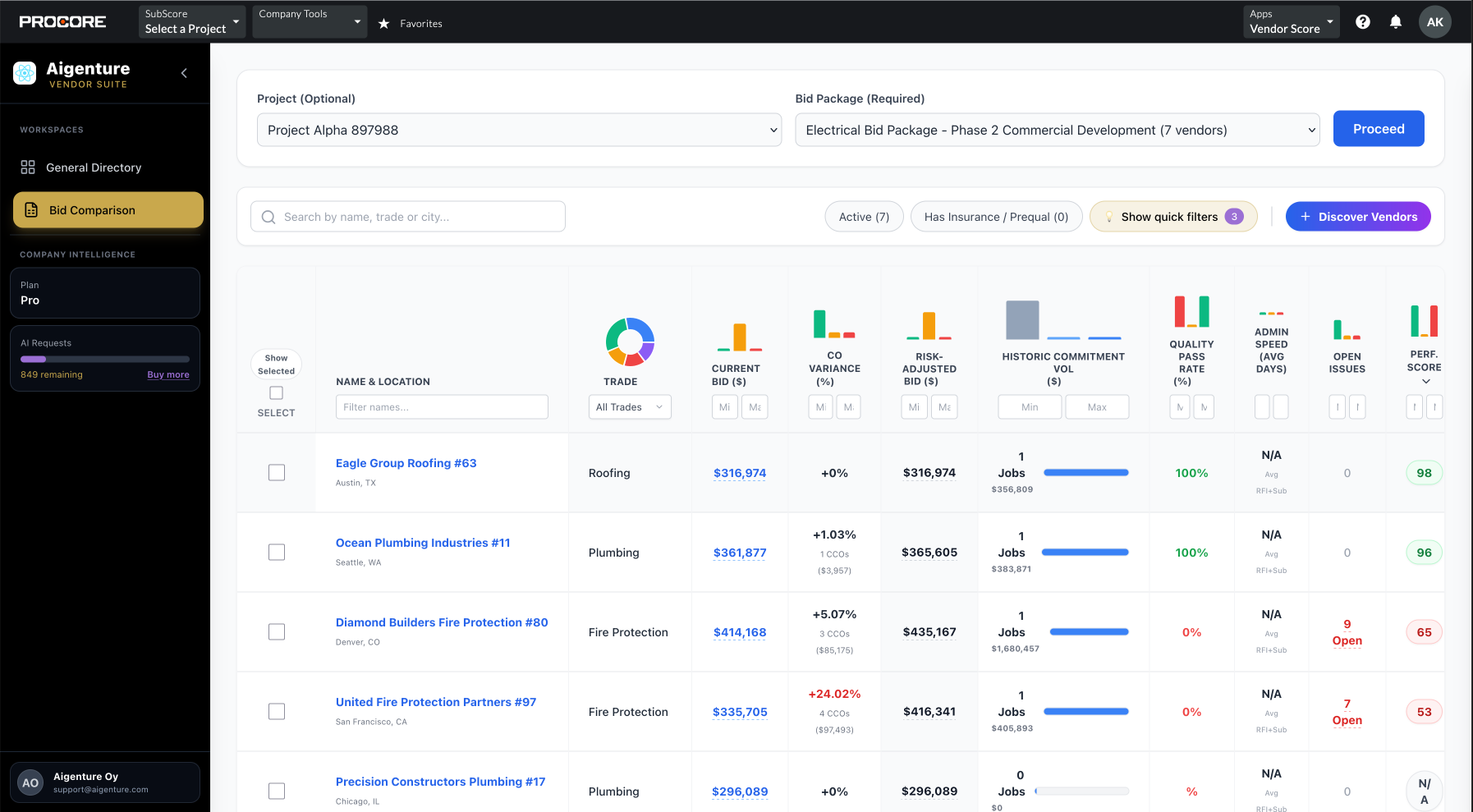
Having a central dashboard like the one shown above ensures that everyone can see the same metrics that led to the award decision.
How to Use Procore for a Seamless Transition
Procore is designed to be a single source of truth, but it only works if you use the tools as intended. According to Procore's own research, teams that centralize data from the start of preconstruction can prevent the loss of up to 30% of project data by the time the job closes out.
The most effective way to handle the transition is to move data directly from the Bidding tool to the Commitments tool. When you award a bid in Procore, you can automatically create a commitment. This pulls the subcontractor's contact info and the total contract value into the project.
However, the "data" isn't just the contract. You should also use the Document tool to create a "Handover Folder" for every major trade. This folder should contain the final bid leveling sheet and any relevant correspondence.
Using a structured Procore bid leveling process ensures that the data being handed over is accurate and easy for the operations team to understand.
Best Practices for the Project Kickoff Meeting
The handover shouldn't just be a digital file transfer. It requires a conversation. A formal kickoff meeting between the estimator and the project manager is essential.
During this meeting, the estimator should explain the "story" of the bid. Why was this subcontractor chosen? Were they the lowest bidder, or did they win because of their superior safety record?
It is also helpful to involve the subcontractor in a separate kickoff meeting. This is the time to review the subcontractor historical performance expectations. If the estimator used field data to vet the vendor, the project manager should know those specific areas of concern, such as past issues with cleanup or schedule adherence.
How Aigenture Bridges the Handover Gap
Aigenture lives natively inside Procore to ensure that no intelligence is lost during the transition. Instead of having bid leveling data trapped in a separate Excel file, Aigenture keeps it directly attached to the vendor's profile and the project record.
When a project manager takes over, they can see the full context of the award. They can view the detailed bid comparison and see exactly how the subcontractor's price was normalized.
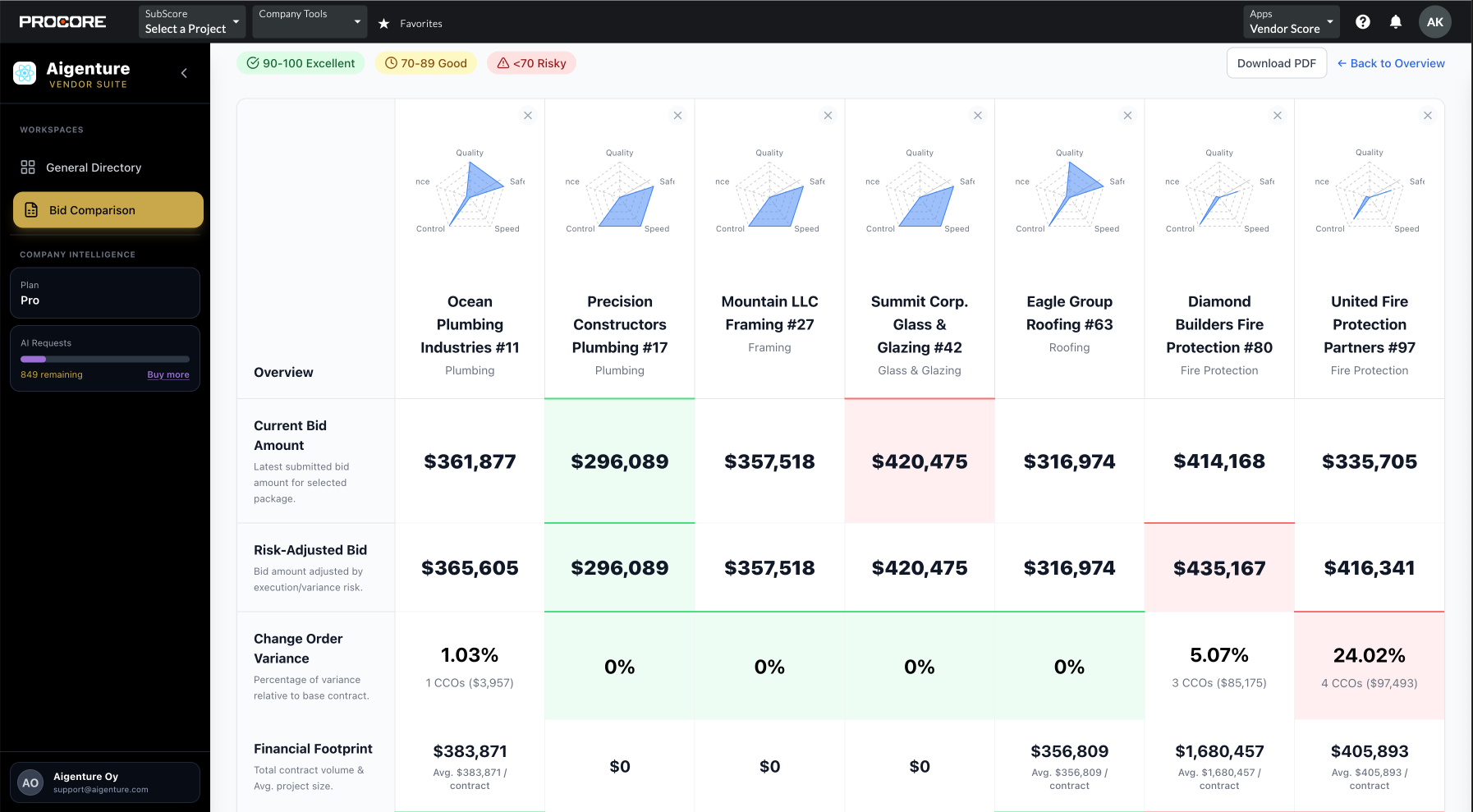
Aigenture also pulls in field intelligence from past projects. This means the project manager doesn't just get a name and a number. They get a complete picture of the subcontractor's history, including their typical change order percentages and quality pass rates. This context is vital for managing the vendor effectively from day one.
By connecting preconstruction intelligence to project outcomes, Aigenture helps general contractors move away from "gut feel" handovers and toward a data-driven workflow that protects project margins.
If you are ready to stop losing data between estimating and the field, you can View Plans or start a 30-day free trial today.
References
Whyte, J., Lindkvist, C., and Ibrahim, N. H. (2016). "From projects into operations: lessons for data handover." Proceedings of the Institution of Civil Engineers - Management, Procurement and Law.
"How to Connect Your Preconstruction Workflow to Procore Without Manual Data Entry." Buildr.
"Leveraging the Procore Platform for Design and Preconstruction." Procore.