
Most general contractors treat preconstruction and field operations as two different worlds. Estimators live in bid packages and spreadsheets, while project managers live in daily logs and inspections. This disconnect is where project margins go to die.
When you award a contract based only on the lowest price or a clean-looking proposal, you are gambling. You are betting that the subcontractor who looks good on paper will also perform well on the job site. But as any experienced superintendent will tell you, a low bid often hides a history of safety violations, poor quality, or manpower shortages.
Procore field intelligence is the bridge that connects these two worlds. It allows preconstruction teams to look at actual project outcomes from the past to make better decisions today.
What is Procore Field Intelligence?
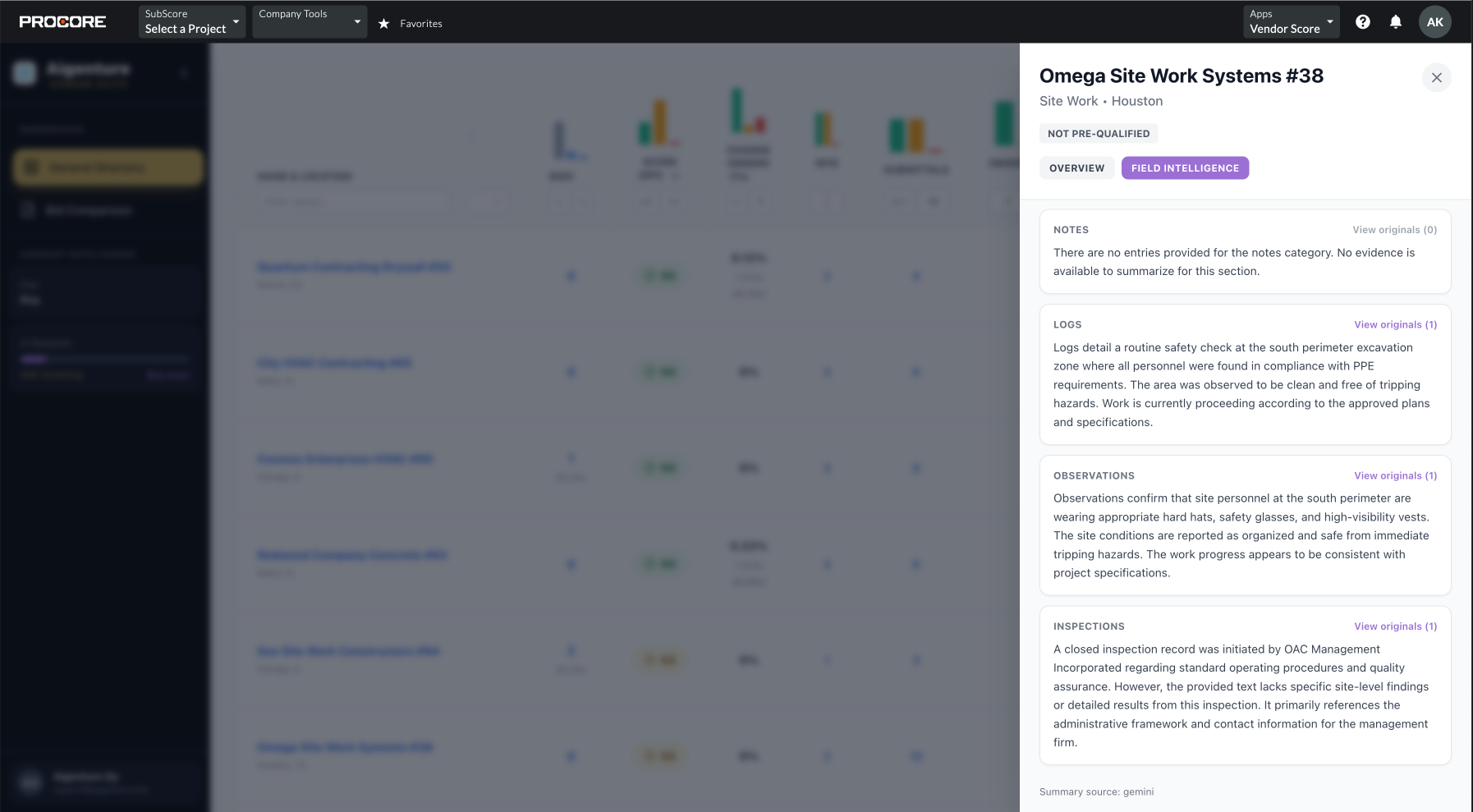
Field intelligence is the collection of data generated during the actual construction phase of a project. In Procore, this includes everything from daily logs and manpower reports to safety observations and quality inspections.
Usually, this data stays buried in the project archives once a job is finished. Field intelligence means pulling that data forward. It is about using the "boots on the ground" reality to inform the "eye in the sky" planning of preconstruction.
Research by Jamal and Abdelaty (2022) found that analyzing field performance ratings from past projects is a reliable way to identify areas for improvement in project delivery and scheduling. By looking at how a contractor actually behaved on site, you can predict their future performance with much higher accuracy.
The Gap Between Estimating and Project Outcomes
The biggest risk in preconstruction is the "lowest bidder trap." You see a bid that is 10% lower than the rest and it looks like an easy win for the budget. However, if that subcontractor has a history of failing inspections or missing schedule milestones, that 10% "saving" will quickly vanish into change orders and delays.
A recent industry report by Procore highlights that connecting estimating and bid management directly to field operations is essential for reducing rework and overspend. Without this connection, estimators are essentially flying blind. They are making million-dollar decisions based on incomplete information.
Anecdotal feedback from project managers is not enough. A PM might remember a subcontractor being "difficult" on the last job, but they might not remember that the sub actually passed every inspection on the first try. Data-driven field intelligence replaces gut feelings with hard facts.
Using Historical Field Data to Inform Awards
To make better award decisions, you need to look at specific metrics from the field.
Inspection Pass Rates
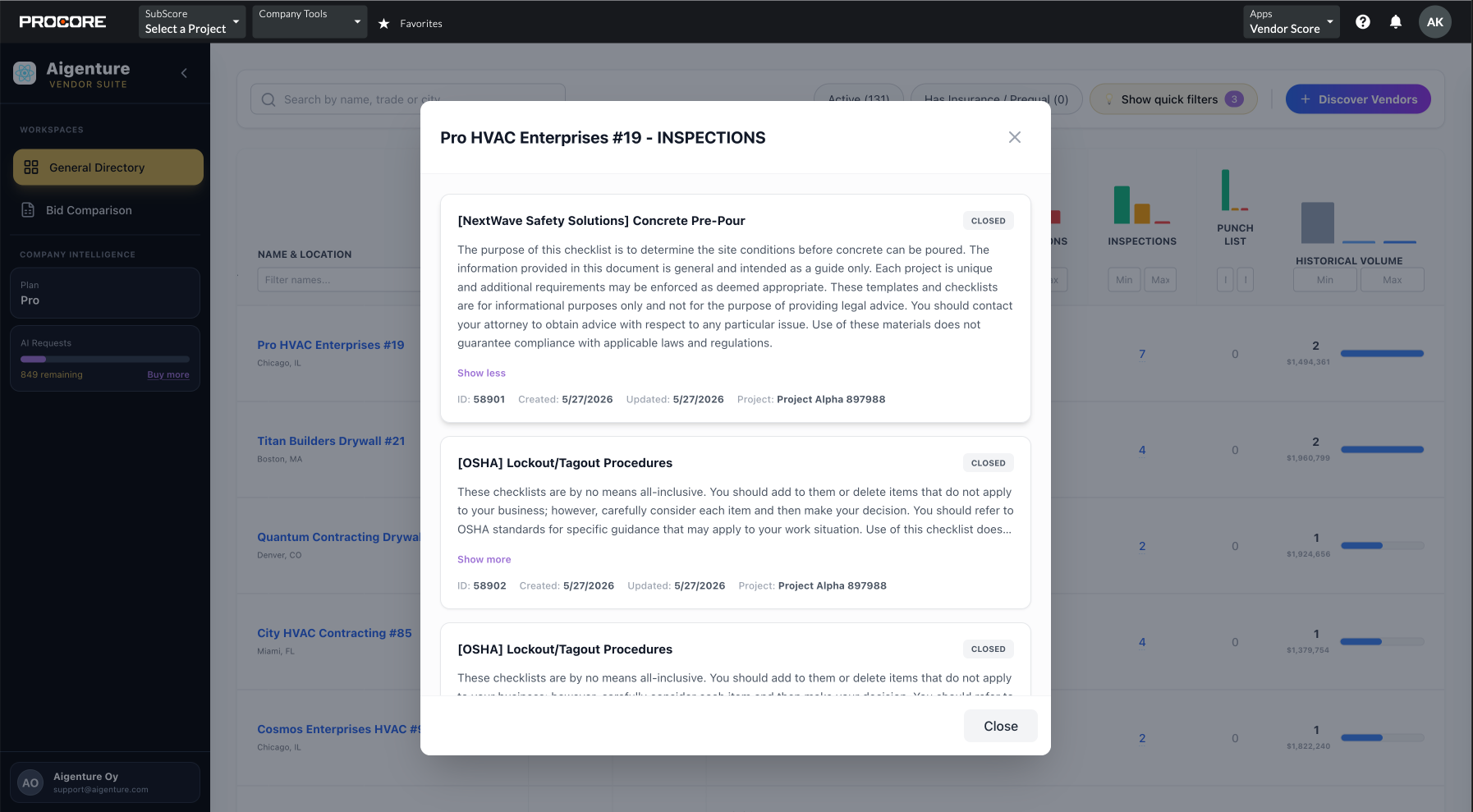
How many times did the subcontractor fail a quality inspection on their last three projects? If their pass rate is consistently low, you can expect to spend more time on punch lists and rework.
Safety Observations
A subcontractor with a high number of safety observations is a liability risk. Field intelligence allows you to see these trends before they set foot on your new job site.
Manpower Reliability
By looking at historical daily logs, you can see if a subcontractor consistently provides the crew size they promised. If they have a history of being understaffed, your project schedule is at risk.
Reducing Risk with Data-Driven Vendor Selection
When you have access to field intelligence, your risk management strategy shifts from reactive to proactive. Instead of dealing with a poor-performing subcontractor halfway through the project, you simply don't hire them in the first place.
This approach also allows you to reward your best partners. If the data shows a specific trade partner consistently finishes ahead of schedule with zero safety incidents, they are worth a premium price. You are paying for certainty, which is the most valuable commodity in construction.
As noted in a study published by Atlantis Press (2024), monthly performance evaluations on site provide a critical bridge between the initial contract award and the actual construction process. This continuous feedback loop ensures that the preconstruction team always has the latest data on who is performing and who isn't.
How AI Connects the Field to Preconstruction
The problem for most GCs is not a lack of data. Procore users often have years of project history. The problem is that there is too much data to analyze manually. No estimator has the time to read through five years of daily logs for twenty different subcontractors.
This is where AI becomes a necessity. AI can scan thousands of field records in seconds. It can identify patterns that a human would miss, such as a subcontractor whose quality starts to slip whenever they take on more than three projects at once.
AI turns unstructured data like "notes" and "observations" into a numerical score. This allows you to compare subcontractors side-by-side during the bid leveling process, not just on price, but on their proven track record.
How Aigenture Automates Field Intelligence in Procore
Aigenture was built to live natively inside Procore. It does the heavy lifting of connecting your field data to your preconstruction workflow.
Instead of hunting through old projects, Aigenture pulls historical performance metrics directly into your bid dashboard. When you are comparing bids, you can see a "Risk Adjusted Price" that accounts for a subcontractor's history of change orders and inspection failures.
Key features include: * Native Integration: No data exports or manual entry. It works where you already work. * Automated Risk Scoring: Instant insights based on your actual Procore history. * Deep Vendor Research: AI-powered deep dives into a subcontractor's financial health and reputation. * 10x Faster Evaluations: Stop wasting time on manual research and start making data-driven decisions.
By using these tools, you can avoid hidden risks in subcontractor bids and ensure that every award is backed by evidence. You can also learn more about how to track and evaluate subcontractor historical performance to build a more resilient supply chain.
Conclusion
The most successful general contractors in 2026 are those who treat their data as a strategic asset. Procore field intelligence is not just about tracking what happened on the job site yesterday. It is about predicting what will happen on your next project tomorrow.
When you connect the field to preconstruction, you stop guessing and start knowing. You reduce risk, protect your margins, and build better projects.
Aigenture helps you turn your Procore data into a decision engine. If you are ready to see how AI-powered field intelligence can transform your preconstruction process, start your 30-day free trial today.
References
Jamal, S., & Abdelaty, A. (2022). "An Analysis of the Contractor's Project Performance Based on Field Performance Rating." ResearchGate.
"The Impact of Monthly Subcontractor Performance Evaluation on the Construction Process." (2024). Atlantis Press.
"Preconstruction Software." Procore.
"Procore Enhances its Preconstruction Solution for Better Cost and Risk Management." Procore.